Sea Freight from China to Sweden: The Complete 2026 Guide (FCL, LCL & DDP)
· By SinoShipment
In 2023, Sweden imported over €10 billion worth of goods from China, making it the country’s seventh-largest import source. For importers moving furniture, electronics, machinery, or retail inventory across this lane, sea freight from China to Sweden remains the cost backbone that makes those margins work — but only when you structure your shipment correctly from the very first decision.
Most cost overruns and delays on the China-Sweden route don’t happen at sea. They happen before the container is loaded — wrong Incoterm, incomplete Tullverket documentation, or destination charges nobody mentioned upfront that quietly inflate your total landed cost by 25 to 40 percent. This guide gives you the full operational picture: real 2026 rates from major Chinese ports, a practical FCL versus LCL decision framework, step-by-step Swedish customs clearance with Tullverket-specific requirements, the complete DDP workflow, Amazon FBA Sweden shipping fundamentals, and seasonal strategies for timing your shipments — all from a forwarder with over a decade of hands-on experience on the Shenzhen-to-Gothenburg lane.
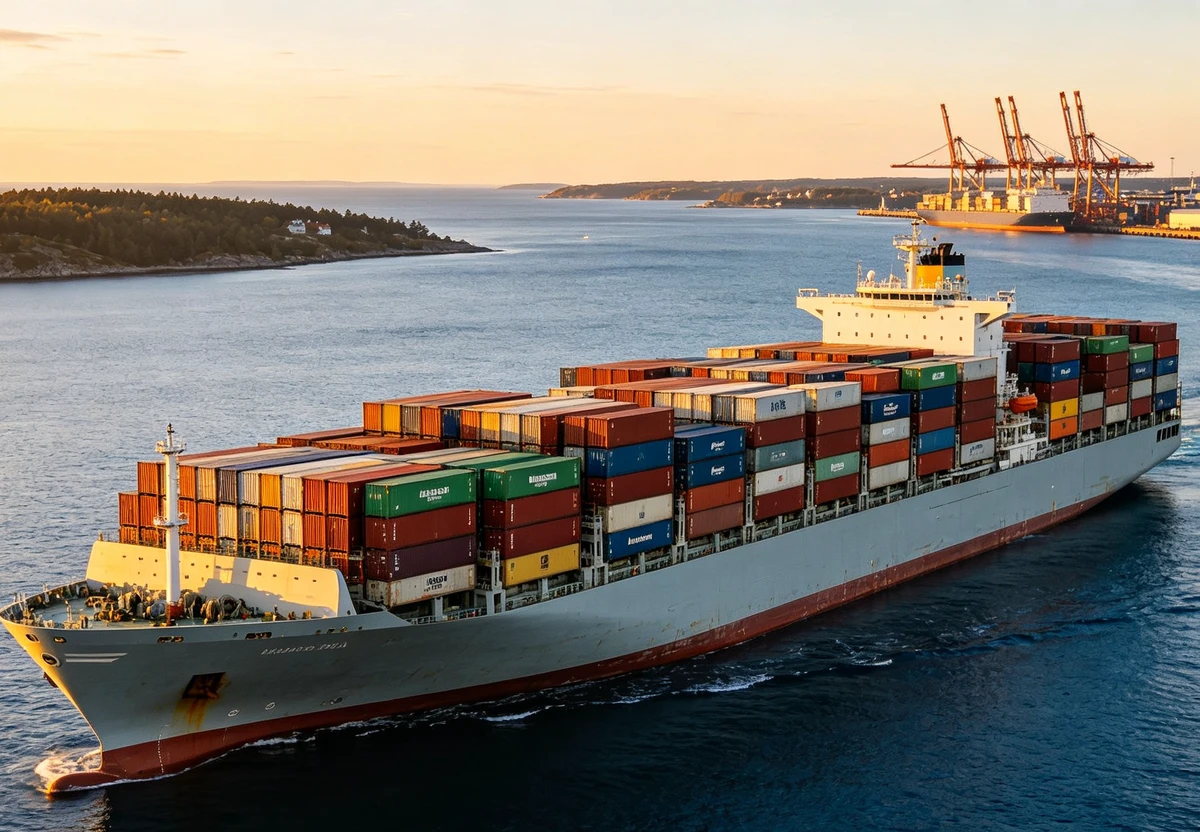
China-Sweden Trade Lane: Routes, Key Ports & Transit Hubs
The sea freight from China to Sweden corridor is a well-established Asia-North Europe trade lane. Containers depart from China’s industrial coast, sail through the South China Sea, transit the Suez Canal, cross the Mediterranean, pass through the Strait of Gibraltar, enter the North Sea, and finally reach the Baltic Sea before docking at Swedish ports. Most vessels complete this journey in 28 to 38 days of pure sailing time, with transshipment hubs in Rotterdam and Hamburg serving as common interchange points.
Chinese Origin Ports
Your choice of loading port in China directly affects both freight cost and transit time. Three ports dominate Sweden-bound traffic:
- Shenzhen (Yantian & Shekou terminals) — Located in the heart of the Pearl River Delta manufacturing zone, Shenzhen offers the highest vessel frequency to Northern Europe. For suppliers in Guangdong province, shipping from Shenzhen eliminates the need for costly inland trucking to Shanghai or Ningbo, saving $300 to $600 per container in domestic haulage. This is the most competitive origin when your factory is in southern China.
- Shanghai — China’s largest container port and the most frequent departure point for direct calls to Gothenburg. Services depart 2 to 3 times weekly, and base ocean freight rates are among the most competitive in the market.
- Ningbo-Zhoushan — A major deep-water port just south of Shanghai with strong container capacity and comparable rates. Often the best alternative when Shanghai terminals are congested.
Secondary options include Guangzhou (Nansha) and Qingdao, which offer slightly fewer sailings and 2 to 5 extra days of transit but can still be viable depending on your factory location.
Swedish Destination Ports
Sweden’s port infrastructure is modern and efficient, but knowing which gateway serves your supply chain best matters:
- Gothenburg (Göteborgs Hamn) — Scandinavia’s largest container port, handling over 60% of all Swedish container traffic. Gothenburg receives direct calls from major carriers including Maersk, MSC, CMA CGM, and COSCO, as well as feeder services from Rotterdam and Hamburg. It’s connected to the rest of Sweden by excellent rail and road networks, making it the default choice for most importers.
- Stockholm — Sweden’s east coast gateway, primarily served by feeder vessels from continental European hubs. Better for importers whose final destination is in eastern or northern Sweden.
- Helsingborg, Norrköping, and Gävle — Regional alternatives that may offer inland transport savings if your warehouse is nearby, but expect longer total transit due to feeder connections.
For importers planning multi-country distribution across Scandinavia and the Baltic region, see our dedicated Freight Shipping from China to Sweden route page for service options beyond ocean freight, including air freight and rail alternatives.
Our Industry Insight: We consistently route PRD-based cargo through Shenzhen rather than trucking containers up to Shanghai, even when the Shanghai base rate looks $100 to $200 lower on paper. By the time you add 1,400 km of domestic trucking, the margin flips. For a standard 40HQ from Dongguan to Gothenburg, the Shenzhen departure saves approximately $400 in total pre-carriage costs and eliminates an extra day of handling risk. This is the kind of optimization that only matters when you actually run shipments on this lane week after week.
Sea Freight Options: FCL vs. LCL for Sweden-Bound Cargo
Choosing between FCL (Full Container Load) and LCL (Less than Container Load) is the single most consequential cost decision you’ll make in sea freight. The right choice depends on volume, cargo value, and timeline.
FCL: Full Container Load
With FCL, you rent the entire container exclusively. It’s sealed at your supplier’s facility and remains sealed until it reaches the destination customs clearance point. Available container types include:
| Container Type | Internal Capacity | Max Payload | Best For |
|---|---|---|---|
| 20ft Standard (20GP) | 28 CBM | 22,000 kg | Heavy cargo: machinery, tiles, dense goods |
| 40ft Standard (40GP) | 56 CBM | 27,000 kg | General consumer goods, furniture |
| 40ft High Cube (40HQ) | 68 CBM | 26,500 kg | Voluminous lightweight goods: electronics, textiles |
FCL advantages include faster transit (no consolidation or deconsolidation delays), lower per-unit cost at high volume, reduced damage risk since your cargo isn’t co-loaded with unknown goods, and 15 to 30 percent lower cargo insurance premiums because insurers price in the reduced handling.
LCL: Less than Container Load
LCL lets multiple shippers share container space. You pay only for the volume you occupy — charged per cubic meter (CBM) or per 1,000 kg, whichever yields the higher charge. This makes LCL economical for smaller volumes but introduces several variables that first-time importers often overlook.
Our Industry Insight: We’ve seen LCL shipments incur $300 to $600 in unexpected destination charges — consolidation fees at origin, deconsolidation and Container Freight Station (CFS) charges at Gothenburg, documentation surcharges, and customs examination fees that only surface on the final invoice. One client shipping 4 CBM of LED lighting from Shenzhen to Gothenburg was quoted $95 per CBM for LCL — $380 total. The final invoice landed at $740 after adding CFS handling ($180), BAF surcharge ($65), documentation ($45), and a minimum billable weight adjustment ($70). A simple FCL comparison quote would have revealed the true cost picture upfront.
FCL vs. LCL Decision Framework
Use these volume thresholds as your starting point, but always compare all-in quotes for your specific shipment:
| Cargo Volume | Recommended Option | Notes |
|---|---|---|
| Under 3 CBM | LCL almost always cheaper | Watch for minimum billable weight clauses |
| 3 – 8 CBM | Compare carefully | Request line-by-line all-in quotes for both |
| 8 – 12 CBM | FCL starts becoming competitive | The cost crossover often happens sooner than expected |
| 12 – 15+ CBM | FCL almost always more economical | Lower per-unit cost plus faster transit |
2026 Sea Freight Rates & Transit Times: China to Sweden
Freight rates on the China-Sweden lane have stabilized through 2026 following the post-Red Sea disruption adjustments, but pricing remains sensitive to fuel surcharges, seasonal demand, and container availability in China.
FCL Container Rates (Q3 2026, Port-to-Port)
The following table shows estimated base ocean freight from major Chinese ports to Gothenburg. These are planning benchmarks — your actual rate depends on carrier, sailing schedule, equipment type, and market conditions on the booking date.
| Origin Port (China) | Destination | 20GP (USD) | 40GP/40HQ (USD) | Transit Time (Days) |
|---|---|---|---|---|
| Shenzhen (Yantian/Shekou) | Gothenburg | $2,800 – $4,200 | $4,800 – $7,000 | 34 – 42 |
| Shanghai | Gothenburg | $2,800 – $4,200 | $4,800 – $6,800 | 32 – 40 |
| Ningbo | Gothenburg | $2,900 – $4,400 | $5,100 – $7,100 | 31 – 39 |
| Guangzhou (Nansha) | Gothenburg | $3,000 – $4,600 | $5,200 – $7,300 | 35 – 44 |
| Qingdao | Gothenburg | $3,100 – $4,700 | $5,300 – $7,400 | 35 – 43 |
LCL Rates
For smaller volumes, LCL is charged per cubic meter:
| Route | Rate per CBM (USD) | Minimum Charge (USD) | Transit (Days) |
|---|---|---|---|
| Shenzhen – Gothenburg | $90 – $130 | $230 – $290 | 38 – 45 |
| Shanghai – Gothenburg | $85 – $120 | $220 – $280 | 36 – 43 |
| Ningbo – Gothenburg | $88 – $125 | $225 – $285 | 35 – 42 |
What’s NOT in the Base Rate
This is where importers consistently underestimate their total freight spend. The base ocean freight above excludes:
- BAF (Bunker Adjustment Factor) — fuel surcharge, typically $300 to $600 per container
- THC (Terminal Handling Charges) — at both origin and destination ports, $200 to $400 each end
- Documentation fees — Bill of Lading issuance, customs entry preparation
- Inland trucking — factory-to-port in China and port-to-warehouse in Sweden
- Cargo insurance — 0.3 to 0.5 percent of declared cargo value
- Customs clearance fees — broker charges at both export and import stages
A reliable rule of thumb: your final all-in port-to-port cost is typically 25 to 40 percent above the base ocean freight line item. A 20ft container quoted at $3,200 base from Shanghai to Gothenburg will land closer to $4,200 to $4,500 once surcharges and handling are included.
Full Door-to-Door Timeline
Here is the realistic end-to-end schedule from Chinese factory to Swedish delivery address:
| Stage | Duration | Cumulative Days |
|---|---|---|
| Factory pickup & origin handling | 2 – 4 days | Day 0 – 4 |
| Export customs clearance (China) | 1 – 2 days | Day 2 – 6 |
| Port delivery, VGM filing, vessel loading | 2 – 4 days | Day 4 – 10 |
| Ocean transit (Shenzhen → Gothenburg via Suez) | 28 – 38 days | Day 10 – 48 |
| Arrival, discharge & terminal handling | 2 – 3 days | Day 40 – 51 |
| Swedish import clearance (Tullverket) | 2 – 5 days | Day 42 – 56 |
| Last-mile delivery within Sweden | 1 – 3 days | Day 43 – 59 |
Total door-to-door: 38 to 55 days, with 45 days being a realistic average for a Shenzhen-to-Gothenburg FCL shipment with clean documentation.
Swedish Customs Clearance: Tullverket, EORI & Import VAT
Swedish customs, known as Tullverket, operates within the EU Customs Union framework but enforces several Sweden-specific requirements that go beyond generic EU procedures. Getting this right before your cargo sails is the difference between a 2-day clearance and a week-long hold accumulating daily port storage charges.
EORI Number: Your First Step
Every commercial importer into Sweden must hold an EORI number (Economic Operators Registration and Identification). This is your business’s unique customs identifier across the entire EU. Apply through the Swedish Tax Agency (Skatteverket) — the process is free and typically takes 3 to 5 business days. Do not book your first shipment without an active EORI number.
Required Import Documents
Tullverket processes customs declarations electronically, and incomplete paperwork is the number one cause of clearance delays at Gothenburg. Here is the full checklist, with Sweden-specific notes:
| Document | Purpose | Sweden-Specific Note |
|---|---|---|
| Commercial Invoice | Customs valuation & duty calculation | Must state HS codes (6+ digits), Incoterm, country of origin, and value per line item |
| Packing List | Cargo verification | Detail per-carton contents, dimensions, and weights |
| Bill of Lading (B/L) | Proof of ownership | Telex Release is standard practice for Sweden |
| Certificate of Origin | Preferential duty claims | Required if claiming reduced rates under EU trade agreements |
| CE Marking Documentation | Product compliance | Mandatory for electronics, machinery, toys, PPE, and medical devices |
| MSDS | Hazardous material declarations | Required for batteries, chemicals, and liquids |
For specific product categories, Tullverket requires supplementary documentation: textiles need composition certificates, food-contact materials require EU 1935⁄2004 compliance proof, and any goods shipped on wooden pallets or crates must carry ISPM 15 fumigation certification.
Swedish Import Duty
Import duty is calculated on the CIF value (Cost, Insurance, and Freight) of your shipment and varies by HS code. Most consumer goods fall in the 2 to 8 percent range, though some categories can reach 12 percent. Use the EU’s TARIC database to look up the exact rate for your HS code before shipping — a misclassified code leads to back duties, penalties, and potential cargo holds.
Swedish VAT (Moms): The 25 Percent Reality
Sweden applies a standard 25 percent VAT (Moms) on imported goods. The calculation is straightforward:
VAT = (CIF Value + Import Duty) × 25%
For example, a shipment with a CIF value of $30,000 and a 5 percent duty rate would incur $1,500 in duty and $7,875 in VAT. For DDP shipments, your forwarder pays this upfront on your behalf. VAT-registered businesses in Sweden can reclaim import VAT through their regular monthly or quarterly filings. Non-EU businesses selling on Amazon.se and storing inventory in Swedish FBA warehouses must register for Swedish VAT.
Our Industry Insight: We pre-review every client’s commercial invoice and packing list against Tullverket requirements before the container even reaches the port. In 2025, this pre-clearance discipline helped our Swedish-bound clients avoid an average of 2.5 days of port storage charges per shipment. Electronics and textiles consistently trigger the most scrutiny from Tullverket — if your goods fall into these categories, double-check your CE documentation and HS code classifications before departure. One incorrect 6-digit code can turn a 48-hour clearance into a week-long examination.
DDP Shipping from China to Sweden: The Complete Workflow
DDP (Delivered Duty Paid) under Incoterms 2020 means your freight forwarder assumes all responsibility, risk, and cost from the Chinese factory floor to your doorstep in Sweden. You receive a single all-inclusive invoice and one point of contact for the entire journey.
DDP vs. Other Incoterms for Swedish Imports
| Incoterm | Who Handles What | Best For |
|---|---|---|
| EXW (Ex Works) | Buyer handles everything from Chinese factory gate | Experienced importers with own China logistics team |
| FOB (Free On Board) | Supplier handles Chinese export clearance; buyer controls ocean freight & Swedish import | Importers with a Swedish customs broker |
| CIF (Cost, Insurance, Freight) | Supplier pays freight & insurance to Gothenburg; buyer handles import clearance | Buyers comfortable with Tullverket procedures |
| DDP (Delivered Duty Paid) | Forwarder handles everything — pickup, export, ocean freight, import clearance, duty, VAT, last-mile delivery | Amazon FBA sellers, first-time importers, B2C e-commerce |
DDP Step-by-Step Journey
A typical DDP shipment from Shenzhen to a Gothenburg-area warehouse follows this sequence:
Days 0 – 2: Truck picks up cargo from your Chinese supplier. Cargo arrives at the forwarder’s consolidation warehouse for inspection, labeling, and container loading preparation.
Days 2 – 4: Export customs declaration is filed with China Customs. The forwarder submits the VGM (Verified Gross Mass) declaration — a mandatory safety filing required before any container can be loaded onto a vessel.
Days 4 – 6: Container is delivered to Yantian or Shekou terminal, passes port security screening, and is loaded aboard the designated vessel according to the carrier’s stowage plan.
Days 6 – 36: Ocean transit. The vessel sails via the Suez Canal, typically making one or two intermediate port calls in Southeast Asia or the Mediterranean before reaching Northern Europe. Real-time container tracking is available through most carriers’ digital platforms.
Days 36 – 39: Vessel arrives at Gothenburg. Container is discharged at the terminal and moves to the designated container yard awaiting customs clearance.
Days 39 – 44: Tullverket import declaration is filed electronically. The forwarder pays import duty and 25 percent VAT on your behalf. Customs may select the shipment for documentary check or physical inspection — well-prepared documentation minimizes this risk.
Days 44 – 47: Once cleared, the container is trucked to your final delivery address anywhere in Sweden. Gothenburg’s central location means most destinations are reachable within 1 to 3 days by road.
DDP Cost Breakdown: 20ft FCL Example (Shenzhen → Gothenburg)
| Cost Component | Estimated Range (USD) |
|---|---|
| Ocean freight (base rate) | $2,800 – $4,200 |
| BAF, surcharges & documentation | $400 – $800 |
| Origin handling & trucking (PRD) | $300 – $600 |
| Destination THC & terminal handling | $250 – $450 |
| Customs clearance brokerage | $150 – $300 |
| Import duty (estimated 5% on $30,000 CIF) | ~$1,500 |
| Swedish VAT (25% on CIF + duty) | ~$7,875 |
| Last-mile trucking in Sweden | $200 – $600 |
| Total DDP (excluding duty & VAT) | $4,100 – $6,950 |
For B2B importers with Swedish VAT registration, the VAT portion is reclaimable — it’s a cash flow item, not a final cost. For non-VAT-registered sellers, VAT is a real cost that must be built into your product pricing from day one.
Amazon FBA Shipping to Sweden from China
Amazon Sweden (amazon.se) launched in October 2020 and has been steadily growing. With Sweden’s 10.4 million consumers and cross-border access to neighboring Nordic markets, FBA sellers who get the logistics right gain Prime eligibility and higher conversion rates. Yet sea freight from China to Sweden for Amazon FBA has specific requirements that generic shipping guides consistently overlook.
FBA Preparation Requirements
Before your goods leave China, every unit must be prepared to Amazon’s exact specifications:
- FNSKU Labeling: Every sellable unit needs a unique Amazon barcode. Labels must be scannable and must not cover the manufacturer’s original barcode. Missing or incorrect FNSKU labels are the most common reason shipments get refused at Amazon’s dock.
- Carton Requirements: Maximum 23 kg per carton. Cartons exceeding 15 kg must carry a “Heavy Package” sticker. No single side may exceed 63.5 cm in length. Each carton must display the Amazon shipment label generated in Seller Central.
- Pallet Specifications: Amazon Sweden uses EUR pallets (1,200 × 800 mm). Maximum height is 180 cm including the pallet itself. Pallets must be stretch-wrapped with “do not break stretch wrap” labels on all four sides.
- FBA Shipment ID: Generated per shipment in Amazon Seller Central, this ID drives your entire logistics chain and must be referenced in all documentation.
DDP and Import Responsibility for FBA
Amazon FBA warehouses do not act as the importer of record. The seller — or their DDP forwarder — must handle Swedish customs clearance and VAT payment. A DDP forwarder pays duties and VAT upfront and delivers directly to Amazon’s fulfillment center with a pre-booked delivery appointment through Amazon Carrier Central.
VAT Registration for Non-EU FBA Sellers
Storing inventory in a Swedish FBA warehouse triggers mandatory Swedish VAT registration, regardless of your business’s location. The registration process through Skatteverket takes 4 to 8 weeks and requires ongoing monthly or quarterly VAT return filings. Start your VAT registration at least two months before your first FBA shipment — inventory held at customs while you wait for a VAT number accumulates daily storage charges.
Our Industry Insight: We’ve helped multiple Amazon sellers transition from pan-European FBA to the Swedish marketplace. The most common mistake we see is sellers assuming their existing EU VAT registration covers Sweden for FBA — it doesn’t. Sweden requires a separate registration with Skatteverket once you hold inventory there. The second most common mistake is treating FBA delivery like a normal B2B delivery. Amazon warehouses operate on strict appointment schedules. If your truck arrives without a pre-booked Carrier Appointment (CARP) or outside the delivery window, it gets turned away — and you pay for the failed delivery plus re-delivery.
Cost-Saving Strategies & Seasonal Shipping Calendar
Smart timing and strategic consolidation consistently deliver the biggest savings on the China-Sweden lane.
Consolidation: One Container Beats Four Pallets
If you source from multiple suppliers in the Pearl River Delta, consolidating everything at a Shenzhen warehouse into a single FCL shipment reduces your per-unit freight cost by 30 to 50 percent versus shipping four separate LCL consignments. A Guangzhou-based importer buying from four different factories can have all goods delivered to one consolidation point, loaded into a 40HQ, and shipped as a single container — eliminating four sets of LCL minimum charges, four consolidation fees, and four destination handling bills.
Port Selection by Factory Location
| Factory Region | Recommended Port | Why |
|---|---|---|
| Guangdong (PRD) | Shenzhen (Yantian/Shekou) | Zero inland trucking, highest sailing frequency, competitive rates |
| Shanghai / Zhejiang / Jiangsu | Shanghai or Ningbo | Closest port with most frequent direct Gothenburg calls |
| Shandong / Beijing / Tianjin | Compare Qingdao vs trucking to Shanghai | Qingdao direct may be competitive during off-peak; otherwise truck to Shanghai |
Seasonal Rate Calendar
Freight rates on the China-Sweden lane follow predictable seasonal patterns:
| Period | Rate Trend | Strategy |
|---|---|---|
| January – February (CNY) | Rates spike 30 – 55% | Ship 4-6 weeks before CNY. Factories close for 2-3 weeks; container availability drops sharply. |
| March – April | 15 – 25% below peak | Best booking window of the year. Post-CNY lull with recovering capacity and low demand. |
| May – August | Stable, moderate pricing | Summer plateau. Reliable for regular replenishment. Book 2-3 weeks ahead. |
| September – October | Rising toward Q4 peak | Pre-Golden Week (early Oct) squeeze, then Christmas inventory rush begins. Book 4 weeks ahead. |
| November – December | Peak pricing: 20 – 40% premium | Book 4-6 weeks ahead. Spot rates hit their annual highs. Contract rates protect against spikes. |
For importers shipping 2 or more containers per month, negotiating a 3 to 6 month contract rate with guaranteed space allocation is almost always cheaper than buying on the spot market during peak windows. Contract rates typically run 8 to 18 percent below prevailing spot prices.
Insurance: The Cheapest Protection You’ll Buy
Marine cargo insurance under Institute Cargo Clauses A costs just 0.3 to 0.5 percent of your cargo’s declared value. On a $30,000 shipment, that’s $90 to $150. A single container damaged in transit or lost overboard without insurance can cost you tens of thousands of dollars with no recourse. FCL shipments enjoy 15 to 30 percent lower premiums than LCL because insurers price in the reduced handling risk.
For importers also serving other European markets from China, Sweden’s Gothenburg gateway connects well with continental distribution. We have detailed guides on shipping from China to Germany by sea covering Hamburg and Bremerhaven, container shipping from China to France with Le Havre and Marseille options, and freight costs from China to Germany for budget planning across the DACH region. If time-sensitive inventory needs faster delivery, our air freight from China to UK guide covers the speed-vs-cost tradeoff for British and Northern European markets.
Frequently Asked Questions
How long does sea freight take from China to Sweden?
Port-to-port transit from major Chinese ports to Gothenburg ranges from 32 to 45 days, with Shenzhen and Shanghai offering the fastest connections. Door-to-door, including origin pickup, customs at both ends, and last-mile delivery, plan for 38 to 55 days total.
What is the cheapest way to ship from China to Sweden?
For shipments under 3 CBM, LCL consolidation is the most cost-effective. For 12 CBM and above, FCL consistently delivers a lower per-unit cost. Between 3 and 12 CBM, compare all-in quotes for both options — the crossover point varies by route, season, and cargo type.
Do I need an EORI number to import into Sweden?
Yes. Every commercial importer into Sweden must have an EORI number. Apply free of charge through the Swedish Tax Agency (Skatteverket) before your first shipment departs China.
How is Swedish import VAT calculated?
Swedish VAT (Moms) is 25 percent, calculated on CIF value plus import duty: VAT = (CIF Value + Duty) × 25%. VAT-registered businesses can reclaim this amount through their regular tax filings.
Which Chinese port is best for shipping to Sweden?
Shenzhen for manufacturers in Guangdong and the Pearl River Delta; Shanghai or Ningbo for factories in the Yangtze River Delta region. Choose the port closest to your supplier to minimize inland trucking costs.
Which Swedish port should my cargo go to?
Gothenburg is the primary choice for the vast majority of international cargo — it’s Scandinavia’s largest container port with direct carrier calls and the best inland distribution infrastructure. Stockholm is a viable alternative for final destinations in eastern or northern Sweden.
What documents are required for Swedish customs clearance?
Commercial Invoice, Packing List, Bill of Lading, Certificate of Origin (if claiming preferential duty), CE marking documentation for applicable products, MSDS for hazardous materials, and specialized certificates for textiles, food-contact materials, or wood-packaged goods.
Can I ship to Amazon FBA Sweden by sea freight from China?
Yes. Use a DDP forwarder who handles FBA preparation (FNSKU labeling, EUR pallet specifications, carton compliance), Swedish customs clearance and VAT payment, and pre-booked Carrier Appointment (CARP) delivery to Amazon’s fulfillment centers.
Are there costs beyond the ocean freight rate?
Significantly. Bunker surcharges, terminal handling charges at both ports, documentation fees, customs brokerage, inland trucking, import duty, and 25 percent VAT all add up. Your all-in cost is typically 25 to 40 percent above the base freight rate, before duty and VAT.
When is the best time to ship to avoid high rates?
March through April (post-Chinese New Year lull) and June through August (summer plateau) consistently offer the most favorable rates, typically 15 to 25 percent below Q4 peak pricing.
Conclusion
Sea freight from China to Sweden delivers the lowest cost-per-kilogram of any shipping mode on this lane, but the difference between a smooth shipment and an expensive one comes down to the decisions you make before the container hits the water. Know your volume so you pick the right FCL or LCL option. Get your Tullverket documentation right — especially if you’re shipping electronics, textiles, or Amazon FBA inventory. Factor in the 25 to 40 percent surcharge margin above base freight. And time your bookings around the seasonal calendar to avoid paying peak rates unnecessarily.
With over 10 years of experience operating from Shenzhen — China’s logistics capital — Sinoshipment manages the entire China-to-Sweden journey under one roof. From factory pickup across the Pearl River Delta, through export clearance and ocean freight, to Tullverket import processing and last-mile delivery anywhere in Sweden, we provide transparent, all-inclusive DDP quotes with no hidden surcharges.
Need a shipping quote for your next Sweden-bound container? Contact Sinoshipment today for a free consultation — whether it’s a single LCL pallet or regular FCL shipments to Gothenburg, Stockholm, or your Amazon FBA warehouse.